
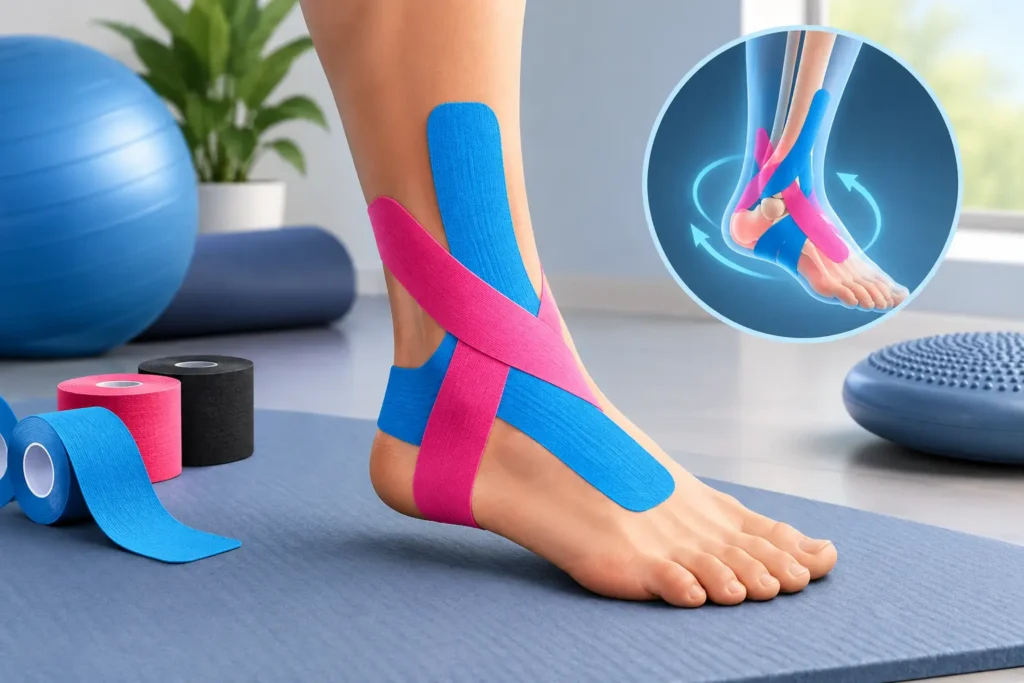
A rolled ankle can make even ordinary New York movement feel uncertain: stepping off a curb, navigating subway stairs, or returning to a run. Kinesio taping for ankle stability can provide a useful layer of support during recovery, but it is not simply about putting tape over the sore spot. For tape to help, it needs to fit the injury, the way your foot contacts the ground, and the movement pattern that allowed the ankle to become vulnerable in the first place.
Kinesio tape is an elastic therapeutic tape designed to move with the body. Unlike rigid athletic tape, which is often used to physically limit motion for a short period, Kinesio tape is generally applied to support awareness, guide movement, and reduce strain on irritated tissues without fully restricting the ankle. For many people, it can be a practical addition to hands-on physical therapy and a progressive exercise plan.
What ankle stability actually means
Ankle stability is not the same thing as having a stiff ankle. A stable ankle needs enough mobility to absorb force when you walk, squat, climb stairs, or land from a jump. It also needs the strength, coordination, and sensory feedback to respond quickly when the ground is uneven or your body weight shifts.
After an ankle sprain, the ligaments on the outside of the ankle are commonly strained. Swelling and pain may settle within weeks, yet the nervous system can remain less confident about where the foot is in space. The calf muscles, small muscles of the foot, peroneal muscles along the outside of the lower leg, hip muscles, and trunk all contribute to how well the ankle manages load. This is why repeated ankle sprains are not always an ankle-only problem.
A clinician may look at ankle range of motion, foot mechanics, balance, walking or running form, hip control, and the relationship between the foot and the rest of your posture. If the big toe is stiff, the arch collapses excessively under load, or the hip drops during single-leg stance, the ankle may have to compensate. Taping can help you move with better awareness while those underlying contributors are addressed.
How Kinesio taping for ankle stability may help
The clearest benefit of Kinesio tape is often proprioceptive feedback. Proprioception is the body’s awareness of joint position and movement. When tape is applied with a specific purpose, the gentle pull on the skin can give the brain more information as the ankle moves. Some patients report that this makes the ankle feel more supported or reminds them to avoid rolling onto the outer edge of the foot.
Tape may also help manage mild swelling by supporting fluid movement through the superficial tissues, particularly in the earlier stages of recovery. In other cases, a therapist may use a tape pattern to cue a more controlled arch position, assist the peroneal muscles, or reduce tension in an overworked calf. The goal is not to force the foot into a perfect position. It is to create a more useful environment for movement while the body regains strength and control.
Research on Kinesio tape is mixed, which is worth saying plainly. It may improve perceived support, movement confidence, and short-term function for some people, but it does not repair a torn ligament or replace rehabilitation. Results depend on the person, the application, the stage of injury, and whether taping is paired with appropriate treatment. If tape makes you feel stable enough to return to activity but you have not rebuilt balance and strength, it can create a false sense of readiness.
When elastic tape is a better choice than rigid tape
Kinesio tape and rigid athletic tape have different jobs. A fresh ankle sprain, a contact sport, or an activity with high risk of another roll may call for a brace or rigid taping strategy that more directly limits end-range motion. Elastic tape is often more comfortable for all-day wear and may be better suited to walking, work, therapeutic exercise, or the transition back to lower-intensity training.
The right choice depends on the demands in front of you. Someone returning to basketball after recurrent sprains may need more mechanical protection than someone whose ankle feels hesitant during daily walks. A person with long-standing ankle stiffness may need mobility and foot control work more than additional external support. There is no single tape pattern that suits every ankle.
Why the application matters
Online taping tutorials can make the process look simple, but ankle taping is highly dependent on placement, tension, and the position of the foot during application. Too much tension can irritate the skin, limit circulation, or create an uncomfortable pulling sensation. Too little, or tape placed without a clear objective, may do very little.
More importantly, tape applied only where it hurts can miss the actual driver of the problem. Consider the runner with pain on the outside of the ankle. The local tissues may be irritated, but the contributing issue could be limited ankle dorsiflexion, poor single-leg control, footwear that no longer supports their needs, or a foot that loses arch control late in a run. The tape may still be useful, but its role should follow a thoughtful assessment rather than replace one.
A physical therapist can use Kinesio tape as part of a broader plan and teach you how to monitor your response. A good application should feel supportive, not constricting. Remove the tape if you experience itching, rash, numbness, tingling, color changes in the toes, increased pain, or swelling that worsens.
Build the capacity that tape cannot provide
Lasting ankle stability comes from gradually restoring the body’s capacity to accept load. That usually includes therapeutic exercise, but the exact exercises should match your current symptoms and goals. Early on, this may mean gentle ankle mobility and controlled weight shifting. Later, it can progress to calf strengthening, foot intrinsic work, balance drills, single-leg training, and sport- or activity-specific movement.
A few common priorities are worth understanding. Adequate ankle dorsiflexion helps the shin move forward over the foot when walking, squatting, and descending stairs. Calf strength helps control impact and push-off. The peroneal muscles help respond when the ankle starts to roll outward. Hip and trunk control affect how force travels down the leg. When one of these pieces is missing, the ankle can be asked to solve a problem that begins elsewhere.
Hands-on care can also have a role when joint stiffness, fascial restriction, or pain is preventing normal movement. At HigherPhysio, Kinesio taping may be combined with myofascial release, functional manual therapy, postural restoration, and individualized therapeutic exercise. The intention is not to keep patients dependent on tape. It is to use it strategically while restoring the mechanics and confidence that make it less necessary over time.
Who should be cautious with ankle taping
Do not use tape over open wounds, active skin infections, or areas with a known adhesive allergy. People with reduced sensation, significant circulatory problems, a history of blood clots, or fragile skin should speak with a qualified clinician before taping. Diabetes does not automatically rule out taping, but changes in skin integrity or sensation require extra care.
A new injury also deserves appropriate screening. Seek prompt medical evaluation for an obvious deformity, inability to bear weight, severe swelling, tenderness directly over the ankle bones or base of the fifth metatarsal, a cold or pale foot, or pain that is escalating rather than improving. These signs may indicate a fracture or another condition that tape should not mask.
Recurring instability is another reason to get assessed. If your ankle repeatedly gives way, if you still cannot trust it months after a sprain, or if ankle pain is changing how you walk, a targeted physical therapy evaluation can clarify whether the issue involves ligament laxity, joint mobility, tendon irritation, foot mechanics, or a broader movement pattern.
The most useful tape is the tape that helps you move better while you build the strength and control to rely on it less. If your ankle has become a recurring source of hesitation, the next productive step is not simply more support – it is finding out what your movement is asking that ankle to do.