
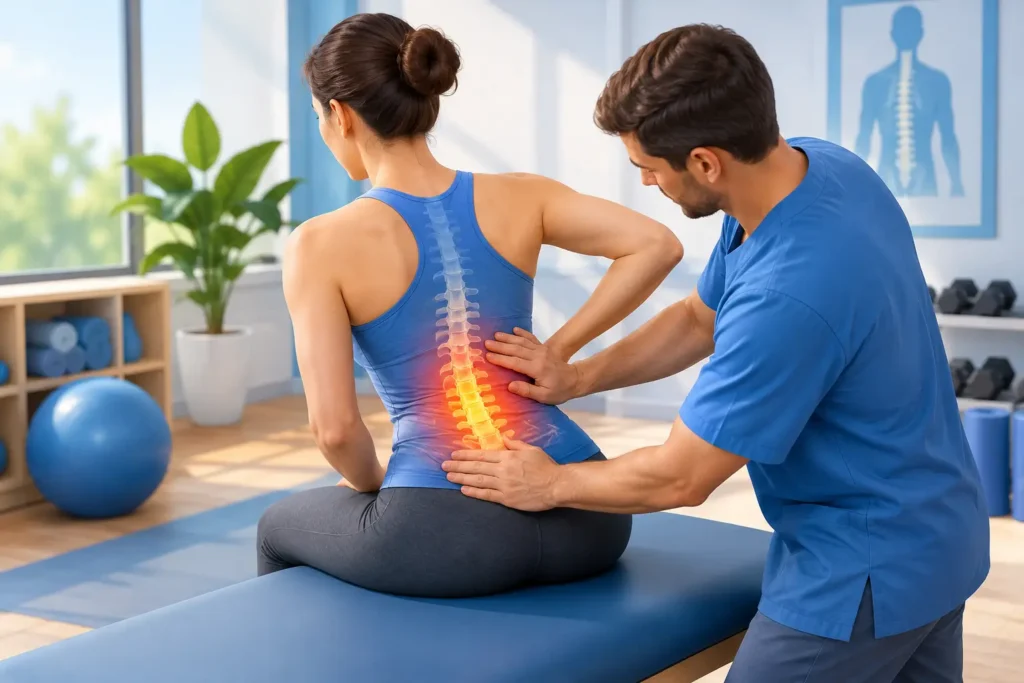
A familiar pattern brings many people into physical therapy: the low back starts aching after a long commute, a workout, or a day at a desk. Rest helps briefly, but the pain returns when they bend, lift, run, or simply get out of a chair. Effective lumbar pain treatment should do more than quiet that sore area. It should identify why the low back is being asked to do too much in the first place.
The lumbar spine is designed to be both stable and adaptable. When the hips, feet, rib cage, abdominal wall, or surrounding fascia are not moving or supporting the body well, the low back often compensates. That does not mean every episode of pain has one simple cause. It does mean that a thoughtful evaluation can reveal patterns that a generic exercise sheet may miss.
Why low back pain is rarely just a low back problem
The lumbar spine sits at a busy intersection. It transfers force between the legs and upper body every time you walk, climb stairs, squat, carry groceries, or turn to look behind you. If the hips lack motion, the feet collapse excessively, or the pelvis is repeatedly pulled into an inefficient position, the lumbar area may become the movement source of last resort.
For a runner, that pattern may show up as low back tightness late in a run. For an office worker, it may feel like pain after sitting that makes standing upright difficult. For someone returning to the gym, it may appear during deadlifts or after a weekend of lifting and home projects. The trigger can be different, but the underlying issue is often a mismatch between what the body needs to do and how it is currently distributing load.
Pain itself can also change movement. Once the back hurts, people understandably brace, move less, or avoid bending. In the short term, that may feel protective. Over time, however, guarding can make the hips, trunk, and surrounding tissues even less tolerant of normal activity. The goal is not to force painful movement. It is to restore comfortable, confident options for moving.
What a complete lumbar pain treatment evaluation looks for
A useful assessment starts with your story. When did the symptoms begin? Was there a specific injury, a gradual buildup, or a recurring flare-up? Does pain travel into the buttock or leg? What positions improve it, and what tasks make it worse? These details help distinguish an irritated structure from a broader movement and loading problem.
The physical examination should then look beyond the lumbar spine. A physical therapist may assess how you walk, stand, breathe, squat, balance on one leg, rotate through the trunk, and move through the hips and ankles. Foot mechanics can matter because the foot is the first point of contact with the ground. If it cannot accept and transfer force effectively, compensations may travel upward through the knee, hip, pelvis, and back.
Posture is part of the picture, but it is not a verdict. There is no single perfect posture that prevents all pain. What matters more is whether you can change positions, access available movement, and tolerate the demands of your day without repeatedly overloading the same tissues.
A clinician may also assess the quality of the soft tissue around the pelvis, hips, abdomen, and thoracic spine. Restrictions in fascia and muscle can limit motion or alter how force is transferred. Skilled hands-on assessment helps determine where tissue is sensitive, restricted, or working harder than it should.
Treatment should match your body and your goals
No single method is the best lumbar pain treatment for every person. Someone with a new strain after lifting may need a different plan than someone whose symptoms have returned on and off for years. The right approach also depends on whether your goal is to sleep comfortably, get through a workday, return to tennis, or train for a race.
Hands-on care can create a better starting point
Myofascial release and functional manual therapy can help address restrictions in the back, hips, pelvis, and surrounding tissues. This is not simply a massage for temporary relaxation. When used as part of a larger plan, hands-on treatment can improve comfort and movement quality so that corrective exercise becomes more productive.
For some patients, treatment may include work around the hip flexors, glutes, rib cage, or feet rather than only the painful lumbar muscles. That can seem indirect, yet it often makes clinical sense. If a restricted hip is forcing the low back to rotate or extend excessively, treating the hip may reduce the demand on the spine.
Acupuncture-informed physical therapy, therapeutic laser, Winback therapy, or Kinesio taping may also be appropriate in select cases. These tools can support pain reduction and tissue recovery, but they are not substitutes for restoring movement capacity. Their value depends on how they fit into the full treatment plan.
Exercise should build capacity, not just give you more to do
Therapeutic exercise is most useful when it is specific. Early on, that may mean learning how to move the pelvis and ribs with less bracing, improving hip motion, or rebuilding tolerance to bending. Later, it may mean progressively loading a squat, hinge, lunge, carry, or rotational movement that reflects what you need in real life.
The best exercise is not always the hardest one. It is the one that challenges the right limitation at the right time. If an exercise consistently increases pain during or after practice, the answer is not always to push through. The range, load, tempo, or movement strategy may need to change.
Movement education matters just as much. Learning how to organize a lift, set up a workstation, break up prolonged sitting, or return to running gradually gives treatment a life outside the clinic. A few well-chosen adjustments can be more sustainable than trying to maintain a long daily routine indefinitely.
When orthotics and whole-body mechanics matter
For some people, recurring lumbar symptoms are connected to how they stand and move from the ground up. A foot that is unstable, rigid, painful, or poorly supported can change the mechanics of the entire lower body. Custom functional orthotics may be helpful when a detailed assessment shows that foot function is contributing to the problem.
Orthotics are not automatically necessary for back pain, and they should not be used as a one-size-fits-all fix. When appropriate, they work best alongside therapeutic exercise, manual therapy, and movement retraining. The aim is to improve the way the body manages force, not simply to place a device in a shoe and hope the pain disappears.
How to handle a flare-up without losing momentum
During an acute flare-up, complete bed rest is rarely the answer. Gentle movement, short walks if tolerated, and temporary adjustments to aggravating activities are often more useful than becoming completely inactive. The specific approach depends on your symptoms, but a flare-up does not automatically mean you have caused serious damage.
It can help to scale the task rather than abandon it. Instead of lifting a heavy suitcase, use smaller loads. Instead of sitting for three hours, stand and walk briefly every 30 to 45 minutes. Instead of returning immediately to high-impact training, rebuild with movements your body can handle consistently. This is not about being fragile. It is about giving irritated tissues a chance to settle while maintaining the confidence and capacity to move.
Heat or ice may provide temporary comfort for some people. Medication can also have a role when recommended by your medical provider. Still, lasting improvement usually requires more than symptom management. It requires understanding the mechanical and behavioral patterns that keep the area irritated.
When low back pain needs urgent medical attention
Most episodes of low back pain improve with appropriate conservative care, but certain symptoms need prompt medical evaluation. Seek urgent attention for new bowel or bladder changes, numbness in the groin or saddle area, significant or progressive leg weakness, fever with back pain, unexplained weight loss, pain after a major fall or accident, or a history of cancer combined with new severe back pain.
Pain that travels down the leg, tingling, or numbness does not always mean an emergency, but it does deserve a careful assessment, particularly if symptoms are worsening or strength is changing. A qualified clinician can help determine whether physical therapy is appropriate and when further medical testing or referral is needed.
A plan built for the life you want to return to
A meaningful recovery is not measured only by a lower pain score on a good day. It is measured by whether you can sit through a meeting, carry your child, take the subway, finish a workout, sleep comfortably, or move without anticipating the next flare-up.
At HigherPhysio, lumbar care begins by looking at the body as an interconnected system, then building treatment around the demands that matter to you. With attentive hands-on care, targeted exercise, and a clear return-to-activity plan, many people can move from protecting their back at every turn to trusting it again. The next useful step is often not doing more on your own, but getting a careful evaluation that gives your body a more specific path forward.